How to Plan an Outing Around Transit, Hours, and Weather
Plan an outing around transit, opening hours, weather, and easy exits so practical snags do not crowd out the places you came to enjoy.
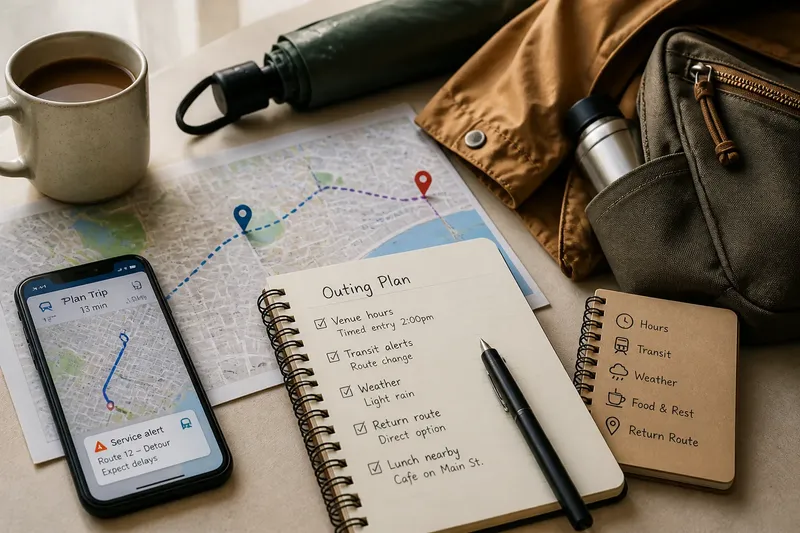
Before you leave for an outing, check the venue’s hours, the route home, and the forecast. Those details do more to shape a comfortable day than adding another pin to your map. A good outing plan handles the transitions between places, not just the places themselves.
Which details should you check before leaving?
Start with the information that can change whether a stop is practical. Check the venue’s own website for opening hours, timed entry, reservation rules, and any access or bag policies that matter to your visit. Then check your local transit operator’s service alerts or parking information for the route you expect to use.
- Opening hours: If the venue is open during the time you can visit, keep it in the plan; if not, choose another destination or visit on a different day.
- Entry requirements: If the venue requires a reservation or timed entry, arrange it before making the stop central; if the available times do not fit, select a walk-in alternative.
- Transit service: If your route is operating as expected, use it; if there is a service alert, choose another route or a destination closer to your starting point.
- Parking and access: If the available parking or entrance suits your needs, proceed; if not, check another arrival option or select a more accessible location.
- Weather exposure: If the forecast suits an outdoor visit, keep the route; if rain or heat would make it uncomfortable, move the outing indoors or shorten the exposed portion.
- Return route: If you have a workable way home from the final stop, keep the sequence; if not, finish nearer a reliable transit stop or arrange another return option.
- Food and rest: If a suitable place to eat or sit is available along the route, note it as a pause; if not, bring what you need or choose a route with a practical break.
How do you make travel between stops manageable?
A map can make two places look like neighbors when the actual trip involves a transfer, a long wait, or a difficult parking search. Check the route using the transit agency’s trip planner, a current map app, or the venue’s directions. Consider the whole transition: getting to the stop, waiting, traveling, and finding the next entrance.
For a walk between places, look at the actual streets and crossings rather than relying on a straight line. If the route includes stairs or steep paths, check whether another entrance or route is available. Keep the plan simple enough that one delay does not force a chain of missed appointments.
Say you have an afternoon, a timed gallery visit, and a market on the other side of town. Imagine the gallery’s site lists the entry time you can make, while the transit app shows a service change on the route to the market. You book the gallery entry, check an alternate route, and find that it requires an extra transfer; the practical decision is to skip the market and have lunch near the gallery instead. The result is a visit with a clear return route, rather than a second stop that depends on a fragile connection.
What should you do when the weather changes?
For an outdoor outing, check the forecast shortly before leaving and match the plan to the conditions you can reasonably handle. A park visit may still work in light rain with a covered café nearby; a long exposed walk may not. Check the venue’s own notices too, since gardens, outdoor performances, and public sites may change access or schedules.
Choose an indoor alternative that is genuinely nearby if the forecast looks poor. A library, gallery, or covered market can preserve the general shape of the day without requiring a cross-town reroute. If no suitable alternative is close, shorten the outing or reschedule the outdoor portion.
How can you tell whether a stop is worth the detour?
Judge a proposed stop by the practical change it creates. It may be worthwhile if it adds a needed meal, a place to rest, or an experience that matters to the people going. It is less useful if it creates a separate journey or depends on a narrow window that leaves no room for delays.
- It is close to the route: If reaching it requires only a natural turn from your existing path, keep it; if it means a separate trip, leave it out or make it the main destination another day.
- It has a reliable schedule: If its hours fit your visit, include it; if the hours are unclear, verify them or choose a venue with confirmed access.
- It gives the group a useful pause: If everyone can use the seating, food, or quiet, keep it as a break; if it serves only as another attraction, let it go.
- It still works if the day runs late: If you can drop it without disrupting your return, mark it optional; if missing it would cause a problem, make it the priority or remove another stop.
- It fits the weather: If the stop remains comfortable in the forecast, keep it; if not, choose an indoor substitute or leave it out.
- It suits the people going: If each person has a reason to enjoy it, include it; if someone would be waiting without a comfortable place to sit or browse, pick a more shared alternative.
What is not worth the effort is optimizing every turn to save a little time when the route is already manageable. A perfectly ordered map cannot make an overfull afternoon feel spacious.
What should you know before you head out?
Should I check venue hours on the day?
Check the venue’s own schedule before leaving, especially if the visit depends on timed entry or a particular exhibition. If hours or access notices have changed, adjust the destination before setting out.
How do I plan around a transit disruption?
Check the local operator’s service alerts and identify a workable alternate route or a closer destination. If the alternative adds too many transfers or makes the return uncertain, simplify the outing rather than relying on a tight connection.
What is a sensible weather backup?
Pick an indoor place near the outdoor plan, such as a library, gallery, or covered market, and confirm it will be open. If no nearby option fits, shorten the outing or reschedule the outdoor activity.
How much should I schedule between stops?
Allow enough time for the actual route, entry, and ordinary delays, using current transit or walking directions rather than a straight-line estimate. If a small delay would make the next appointment impossible, remove a stop or choose a less constrained plan.
Which logistics deserve your attention?
For an outing plan, prioritize details that could derail the visit: hours, entry requirements, route changes, weather, and the way home. Keep current information from the venue or local operator, and make a clear alternative decision for any item that fails. That is usually enough; the rest can be settled as the day unfolds.
A useful outing plan leaves you knowing where to go, how to get there, and what to change if conditions shift. Once those practical questions are settled, you can stop checking the map and pay attention to the actual place.