A Rainy Afternoon with Easy Company
Plan a rainy afternoon with easy company using one joinable game, simple snacks, and a flexible ending that lets guests relax without a rigid schedule.
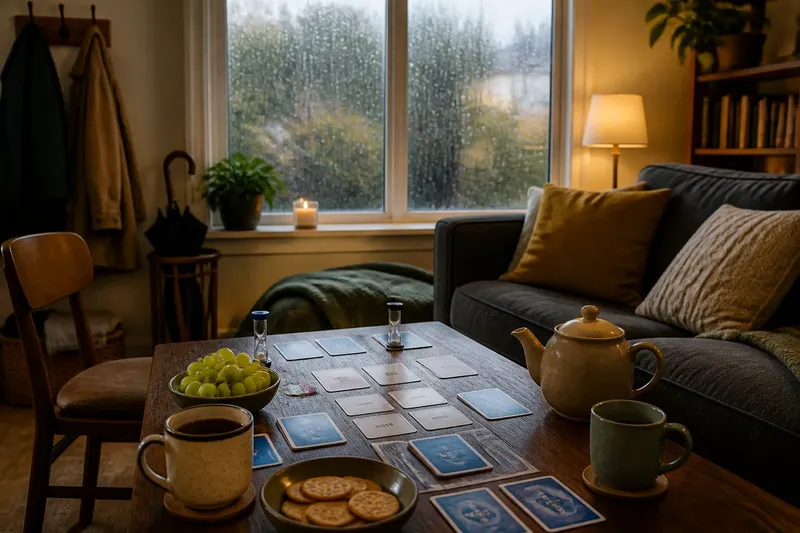
A rainy afternoon with easy company can begin before everyone arrives: clear a place for coats, put the kettle on, and leave a chair open for someone delayed by the weather. Choose one game that guests can join without a long explanation, then let the room set the pace. The aim is shared time, not a schedule with snacks attached.
How do you plan a rainy afternoon with easy company?
Think in loose stages: arrival, a game, a pause, and a natural finish. Keep the game, drinks, and seating within reach. A plan this small leaves room for conversation, late arrivals, and the possibility that nobody feels like playing after all.
Choose a game that fits the group and can handle a changing number of players. Cooperative games, simple card games, and familiar party games are often easier to join than a game with lengthy rules or long waits between turns. If the game only works when every player stays for the whole session, pick a more forgiving option.
Say you invite four friends, and one may arrive late because of the rain. You choose a cooperative word game that can be joined between rounds, set out tea and crackers, and leave a chair near the table. When the late guest arrives, the group can explain the next round instead of restarting a dramatic final. That is a small design choice doing useful work.
What should you prepare before guests arrive?
Clear a table or coffee table, check that the game has its pieces, and put the instructions somewhere visible. Make sure there is enough seating, including a place for someone who would rather watch or talk. A backup game is reasonable; a tournament bracket is not.
Keep the food simple and easy to serve. Tea, coffee, water, fruit, crackers, or sandwiches can stay available without requiring the host to disappear into the kitchen. Check for dietary needs when you invite people, and choose snacks accordingly. A rainy afternoon is a poor time to discover that the only food requires careful assembly.
Make the entrance easy to understand. Set aside a spot for wet coats and umbrellas, and mention any shoe preference in advance. A short invitation can say when to arrive, whether food will be provided, and whether guests should bring anything. Clear details spare everyone the game of guessing what “casual” means.
How can guests arrive without a formal start?
Welcome the first guest with a drink and show them where to put a coat. Conversation can begin while others are on their way; early arrivals might look at the game or choose which one to play. Nobody needs to wait in a circle until the full cast has assembled.
Once most people are settled, explain only the rules needed to begin. If the game is unfamiliar, play a practice round. Save details that matter later until they arise, and make sure a late guest can join at a natural stopping point.
If the game depends on everyone being present, say so in the invitation and agree on a loose start window. Otherwise, there is little reason to announce an official opening. A guest who needs to leave early can take part in a short round or sit out without disrupting the afternoon.
How do you keep the game easy to join?
Choose a pace that leaves room for talk. Repeat rules in plain language, welcome questions between turns, and correct mistakes only when they affect how the game works. A social afternoon is not an examination with snacks.
Notice when attention shifts. People may stop following turns, start side conversations, or simply look ready for a break. Offer a pause instead of insisting on another round. If the group is still engaged, carry on; the host’s role is to read the room, not enforce a timetable.
For a game that is hard to join mid-round, agree on a stopping point before play begins. Keep the box and score notes together, so a pause or change of plan does not turn into a search through the room.
What can you do when the afternoon needs a pause?
Set out drinks, offer another snack, or let people stretch. A pause can be quiet. If the game has run its course, offer a simple choice: stop, switch to an easier game, or let conversation take over. Moving from the table to the sofa or putting on quiet music can help, but no rescue operation is required.
What is not worth the effort? Elaborate decorations, a complicated menu, and a timed sequence of activities. They add chores without making company easier. One small touch, such as turning on a lamp on a gray afternoon, is enough.
What do guests usually wonder about?
What kind of game suits a casual indoor gathering?
Pick a game with rules you can explain plainly and a player count that fits the group. Cooperative games and familiar card games can work well when people want to talk while they play.
Should guests bring food or a game?
Say so in the invitation if you want them to bring something. Otherwise, make clear that they can simply arrive; this avoids turning “casual” into a potluck by implication.
What if someone does not want to play?
Make it normal to sit nearby, chat, or take a break. Participation should be welcome, not treated as a duty.
How do you end the afternoon naturally?
Let the current round reach a stopping point, then say whether you are wrapping up or are happy to pour another cup of tea. Put the game away with its pieces together, offer a clear goodbye, and accept small offers of help without making guests responsible for cleanup. One calm cue is enough; an afternoon at home does not need closing remarks.
A rainy afternoon with easy company works because the preparations make it easy to settle in, not because every moment has been planned. Keep the game joinable, the food simple, and the ending clear but unceremonious. If the conversation outlasts the game, the afternoon has already found its better plan.